Affiliate disclosure: This post contains affiliate links. If you buy through them, we may earn a small commission at no extra cost to you.
There's one cabinet in almost every kitchen that you open bracing for impact — the one where the water bottles and travel mugs live. Reusable bottles, kids' cups, coffee tumblers and a small nation of orphaned lids have quietly taken over, and every reach for a single cup triggers a plastic landslide. It's a small daily friction, and it's very fixable. Here's how to turn that cabinet from a hazard into the tidiest one in the kitchen.
Step 1: Empty it and be ruthless about doubles
Take everything out — bottles, mugs, tumblers, sippy cups, every loose lid — and line it up on the counter. Now match lids to bottles. Anything with no matching lid, no matching bottle, a stubborn smell, or a cracked seal goes. Be honest about doubles, too: most of us keep six bottles and actually use two. Aim to keep the ones you reach for weekly plus a small buffer, and let a local shelter or donation bin take the rest.
This step alone usually halves the pile. A cabinet overflows not because it's small but because it's storing a collection nobody uses.
Step 2: Store lids and bottles separately
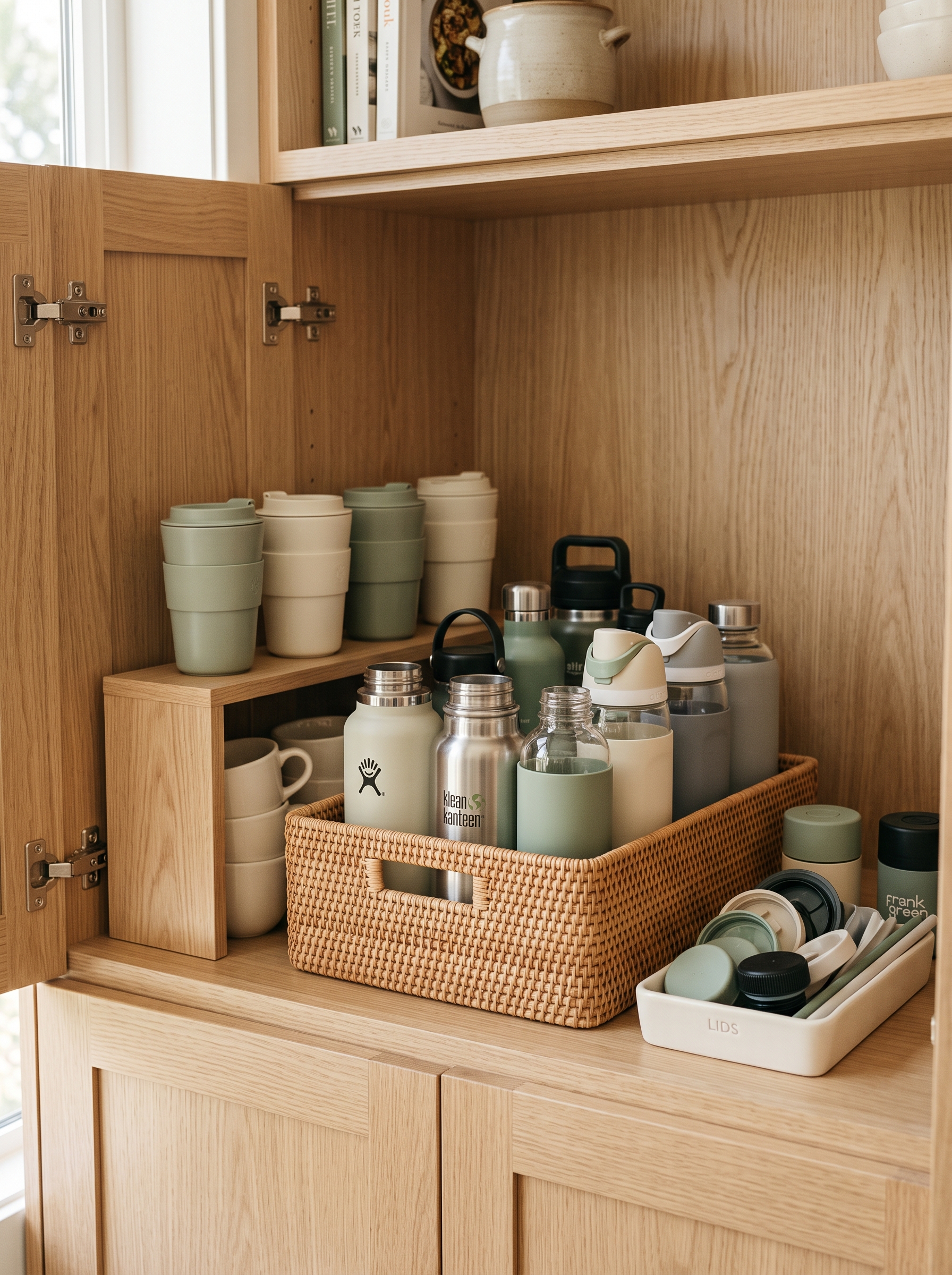
The core trick that fixes this cabinet forever: stop nesting lids on bottles, where they slip off and vanish. Store the bottles standing together and drop all the lids into one bin or drawer organizer so they live in a single findable place. Shop on Amazon → When every lid is corralled in one spot, matching one to a bottle takes seconds instead of a full excavation.
Step 3: Add a shelf riser to double the vertical space
Water bottle cabinets are almost always tall and half-empty up top — wasted air above a single layer of cups. A cabinet shelf riser splits that height into two usable levels: short cups and tumblers below, tall bottles above. Shop on Amazon → Suddenly the cabinet holds twice as much without a single new cup falling out when you open the door.
Step 4: Stand tall bottles in a bin so they can't topple
Tall, tippy bottles are the real avalanche culprits. Corral them upright in a deep storage bin or a divided rack so they stand like books instead of dominoes. Shop on Amazon → A file-style rack designed for bottles lets you pull the one you want without disturbing the rest — the same reason we file plates and lids upright everywhere else in the kitchen.
Step 5: Give kids' cups their own low zone
If small people live in your house, their cups and bottles belong in a low drawer or bin they can reach themselves — ideally near the fridge or the water dispenser. Shop on Amazon → A dedicated kids' bin keeps their tumblers out of the adult cabinet, cuts the total chaos in half, and quietly teaches them to put their own cup away.
Keep it from creeping back
This cabinet refills fast because reusable bottles are the freebie of the modern world — races, conferences, kids' parties. The rule that holds the line is one-in, one-out: a new bottle comes home, an old one leaves the same day. Once a season, do a quick lid-match pass and pull anything stained or seal-worn before it becomes background clutter again.
The two-minute reset
When bottles come out of the dishwasher, take the extra moment to send each one home standing up, with its lid in the lid bin rather than balanced on top. That tiny habit is what keeps the door openable. Start with the great empty-out and lid-match this weekend — clearing the orphans and doubles is the step that makes the whole cabinet click into place.