Affiliate disclosure: This post contains affiliate links. If you buy through them, we may earn a small commission at no extra cost to you.
The space under your bed is some of the most valuable storage in your home, and in most bedrooms it's either wasted or a black hole of dust and forgotten boxes. Used well, that footprint can hold an entire season's clothes, the spare bedding, or the bulky things that have no home elsewhere — all hidden, all within reach. The trick is treating it like real storage with real containers, not a place to shove things and hope. Here's how to reclaim it.
Step 1: Clear it out and see what you're working with
Pull everything out from under the bed and take a good look — both at what was hiding there and at the space itself. Measure the clearance from floor to bed frame; that number decides what will actually fit. Wipe or vacuum the floor while it's empty, because whatever goes back is going to sit there for months. As you sort the pile, be ruthless: the broken umbrella, the mystery cables, the clothes two sizes away all leave now, so you're only storing things worth keeping.
Step 2: Choose the right containers for the height
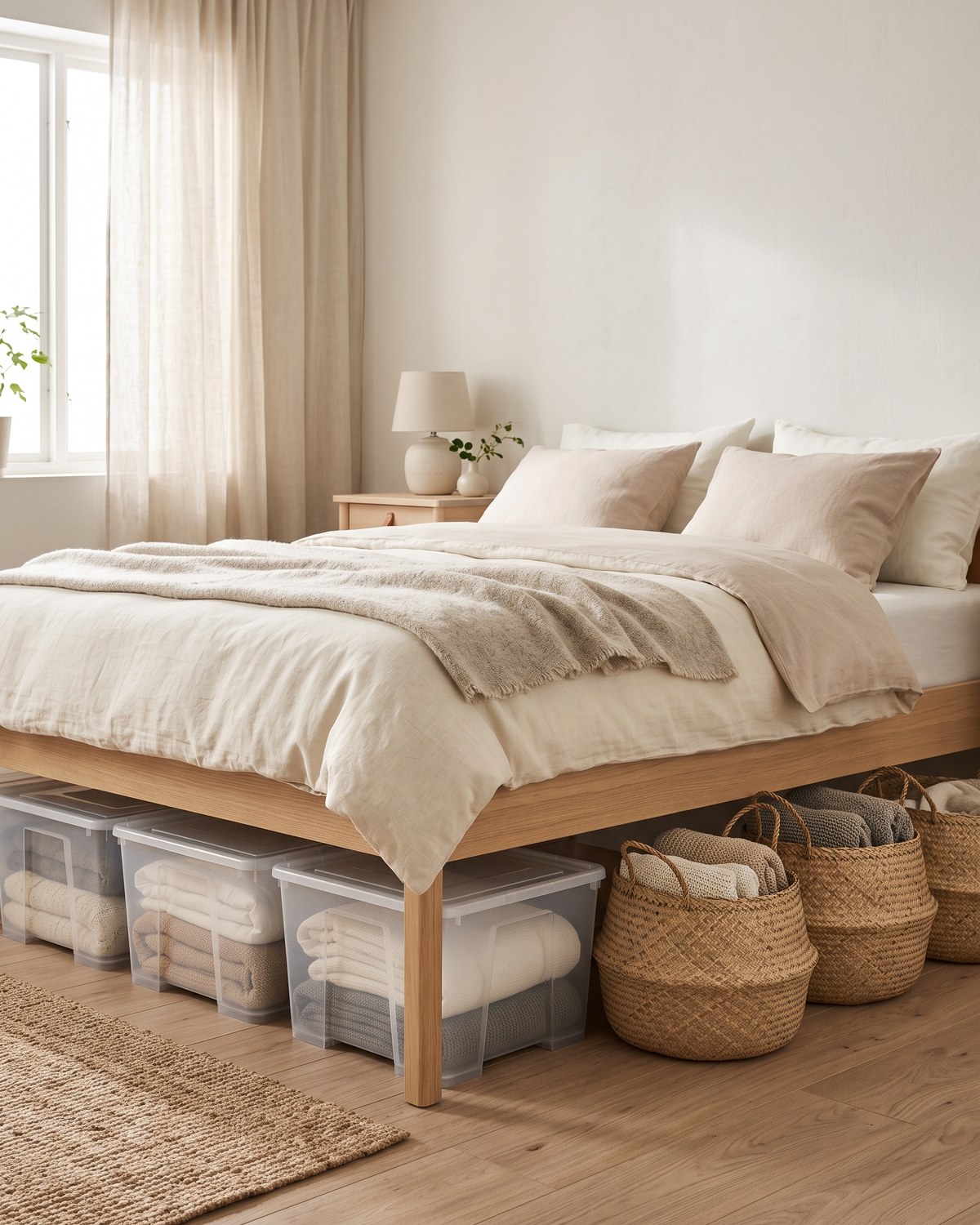
Under-bed storage lives or dies by the container. Loose piles collect dust and slide out of reach, so everything should go in a closed box on the low, wide footprint the space wants. Flat under-bed storage bins with lids slide in and out on the floor and keep contents clean; clear ones let you see what's inside without dragging each one out. Shop on Amazon → If your clearance is tight, look for shallow rolling versions with wheels that glide instead of scraping the floor. Shop on Amazon → Match the box height to your measurement — a bin an inch too tall is a bin that never fits.
Step 3: Use vacuum bags for bulky soft goods
Bedding, winter coats, and knits eat volume you don't have. Vacuum storage bags compress a whole comforter or a stack of sweaters down to a fraction of their size, then tuck flat under the bed — and the seal keeps out dust, damp, and moths. Shop on Amazon → Slide the compressed bags into a bin rather than loose, so they stay flat and easy to pull. This is the single biggest space win under a bed: soft, bulky, seasonal things almost always belong here.
Step 4: Zone it by category and label
Once your boxes are in, give each one a job so you're never hauling all of them out to find one thing. One bin for off-season clothes, one for spare bedding, one for gift wrap or keepsakes — whatever suits your home. A quick label on the end that faces out turns the whole row into a searchable drawer. Shop on Amazon → Store the things you reach for most near the sides of the bed where they're easiest to grab, and push the rarely-touched bins toward the center.
Step 5: Lift the bed if you need more room
If the clearance is too low to be useful, you can buy height. Bed risers lift the frame a few inches on sturdy feet, instantly turning a cramped gap into space that fits a proper bin. Shop on Amazon → A set of four is cheap and takes minutes to install, and the extra few inches can be the difference between storing nothing and storing a full season's worth. Just don't lift so high the bed becomes hard to climb into.
Keep it from becoming a black hole again
Under-bed storage tips back into chaos the moment it becomes a dumping ground. The rule that keeps it useful: only lidded, labeled containers go under there — nothing loose, ever. Twice a year, when you swap seasonal clothes, pull the bins, wipe the floor, and re-sort so nothing rots forgotten in the dark.
The occasional check-in
Because it's out of sight, under-bed storage is easy to forget entirely. Put a reminder on your seasonal calendar to open each bin, confirm you still want what's inside, and dust the floor. Two check-ins a year is all it takes to keep this hidden storage working instead of quietly filling with things you'll never miss.
Under-bed space is free square footage you already own. Start by pulling everything out this weekend and measuring the gap — once you know what fits, the right bins turn a dusty afterthought into some of the most useful storage in the house.